A Look Back at Old Fake IAs
In the context of the explosion of LLMs and generative AI, I’ve reflected on the first programs I encountered that mimicked dialogue with a human interlocutor. Nostalgic journey…
First programs for fun
I remember with emotion my Amstrad PC 1512 on which I could discover programming with GW Basic (certainly there was a desktop environment - GEM Desktop - on this computer, but I always preferred the DOS command line :-))
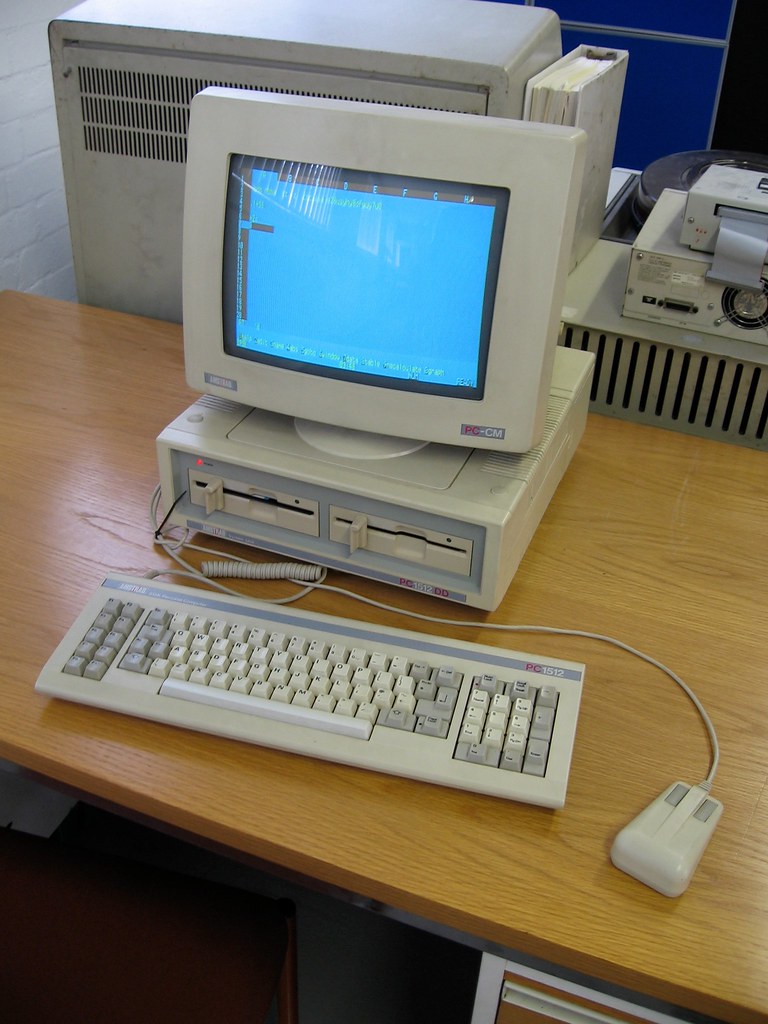 Source: M.Wichary on Flickr
One of the first programs I could type was something like:
10 CLS
20 INPUT "What is your name "; NOM$
30 PRINT "Hello "; NOM$
This gave the illusion of a conversation… which didn’t go very far, it must be admitted, but you have to start small.
Eliza
Some systems were nevertheless capable of simulating conversation, often using basic techniques to give the impression of intelligence.
For example, Eliza, a program created in 1966 by Joseph Weizenbaum at Princeton University. This program simulated a psychotherapist, using a simple principle of word replacement and sentence reformulation to give the impression of active listening. (I met this program by browsing public domain archives on floppy disks)
One of Eliza’s particularities was to recognize certain key phrases and respond with randomly generated sentences to seem natural. For example, if you said “I’m hungry”, Eliza could respond with “When did you last feel hungry?”.
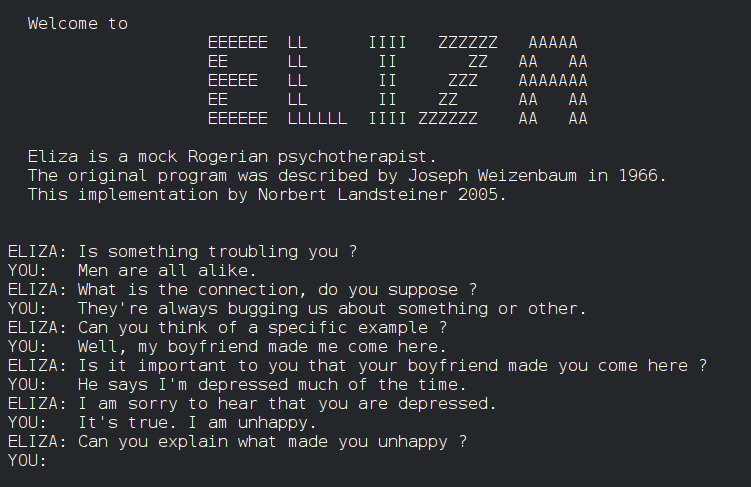 Source: Wikimedia Commons
These programs were based on very simple natural language processing techniques, without true understanding of word meaning. However, they could still create an impression of conversation, especially when using responses like “tell me about your family” or “can you tell me why you feel this way?”.
Dr Sbaitso
Another program from this era was DrSbaitso, developed in 1991 for DOS and distributed with Creative Labs cards (type SoundBlaster). It was a conversational agent of the same type as Eliza, with voice synthesis added. I tried Dr Sbaitso during the first days I got my Sound Blaster Pro on my first “self-built” PC :-).
In the 1980s and 1990s, people were trying to create chat systems to simulate human mind, even though powerful tools to naturally process human language were not yet available. These fake IAs played an important role in popularizing AI concepts at the time. Eliza and Dr Sbaitso demonstrated that even a machine could simulate human conversation, even if this simulation was based on simple rules.
Zork
Do you remember Zork and Infocom games? If not, I encourage you to take a look at the documentary GET LAMP.
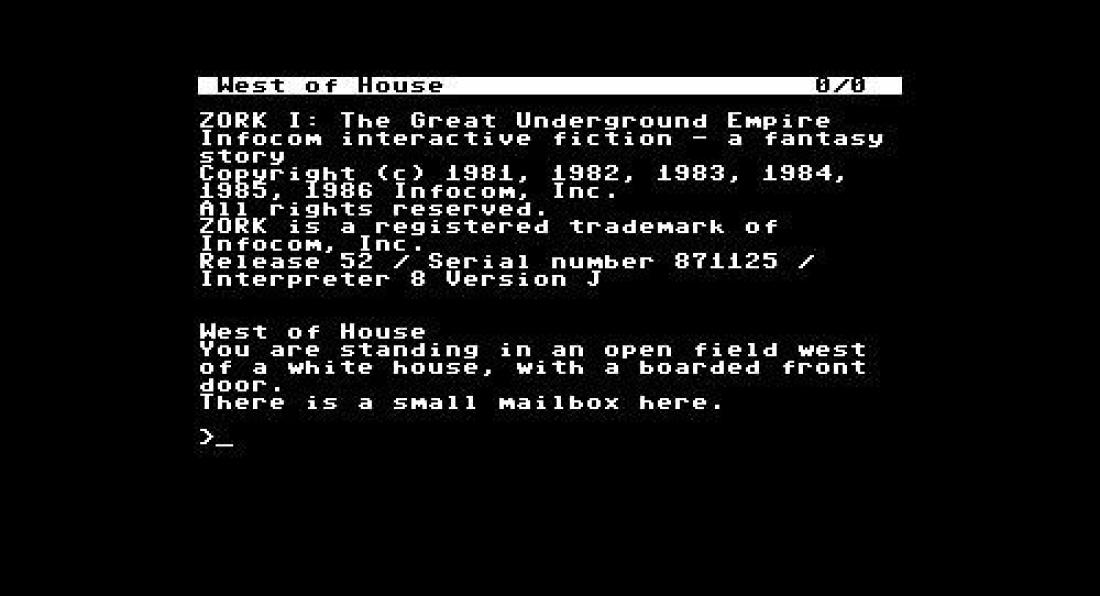 Source: Code like this
Even though these games didn’t simulate human conversation, their understanding of complex sentences by their “parser” was often bluffing.
In short, we are far from today’s LLM achievements, but these tools were more than just amusement, they represented an intellectual and technological challenge at a time when computing power was still limited.